
Monday, September 24, 2012
Sri Daladamaligawa

Thursday, September 20, 2012
SIGIRIYA

You have all heard about Sigiriya and perhaps you have visited it. It is a
small village ten miles off Dambulla in the district of Matale in Sri Lanka.
Visitors go there nearly every day to climb its huge Rock of ancient fane and
see the beautiful paintings on a part of its walls as well as the interesting
ruins found there. This Rock id very steep and is about 600 feet in height. It
was once the “fortress” of king of eighteen years. Here is the story of this
king.
Sunday, September 2, 2012
ALEXANDER FLEMING
 Alexander Fleming, who was born on the 6th of August 1881 in Litchfield,
was a Scottish bacteriologist. This scientist invented penicillin in 1928.
Penicillin is a substance which can be used for preventing the growth of bacteria.
Alexander Fleming, who was born on the 6th of August 1881 in Litchfield,
was a Scottish bacteriologist. This scientist invented penicillin in 1928.
Penicillin is a substance which can be used for preventing the growth of bacteria.
The story of the discovery of penicillin is very interesting.
One day while Fleming was using a dish for his antibacterial experiments,
be noticed that some strange flecks of fungus had grown in that uncovered dish
containing mucus from infected wounds. He also noticed that this fungus had
killed the bacteria, on that dish. The fungus had been caused by a spore which
had flown in through a window and settled on the dish. In his further
experiments be found that it was penicillium which was a rare fungus in the mould
family
Thursday, August 30, 2012
SIR ISAAC NEWTON

Sir Isaac Newton was
born on the 25th of December, 1642 in Lincolnshire. While in school
he did not do well, but possessed greater talents in drawing and mechanical
inventions. Fortunately one of his uncles saw his talents and made the way for
him to enter Trinity College. There he graduated in mathematics in 1669. He
worked closely with his professor Isaac Barrow who gave him every help to
improve his talents. Later Isaac Newton succeeded his professor and became professor
of mathematics at Trinity at the age of twenty seven.
Sunday, August 26, 2012
THE CEYLON ELEPHANT

The elephant is the king of the Ceylon jungle. No other animal dares to
challenge his kingship. In their wild state, elephant live in small herds,
about twenty-five in each. A full-grown male is usually the leader of the herd.
Such a leader, in all his majesty and dignity, roams the jungle with his
followers. Some elephants have tusks from which we obtain ivory; but “tuskers”
are now rare in Ceylon.
Saturday, August 18, 2012
Natural ecosystems in Sri lanka

Dry Misxed Evergreen forests -
 Montane Foreses -
Thorn Forests, Scrub lands -
Bird's Paradise - Kumana
Elephants - Ceylon elephants
-Elephant Orphanage
Coral Reef -Hikkaduwa beach

Monday, July 2, 2012
IN PARADISE OF KUMANA
Boarding the yala
National park to the east is the well- known bird sanctuary, Kumana. As you
approach Kumana you hear a rather noisy invitation – the sound of thousands of
birds calling one another. Here a large variety of indigenous acquatic birds
gather from April to July marking Kumana a birdwatcher’s paradise. There are
herons, Storks, egrets and spoonbills nesting in the trees above, Water hens,
Purple coot and jacana build their nests in the swamp below.


Saturday, June 30, 2012
Human Blood Circulation
 Imagine being smaller than the period at the end of the sentence. Imagine
being microscopic! Suppose you are almost as tiny as a red blood cell. Picture
your self inside a human heart. You are about to take a guided tour of a human
circulatory system.
Imagine being smaller than the period at the end of the sentence. Imagine
being microscopic! Suppose you are almost as tiny as a red blood cell. Picture
your self inside a human heart. You are about to take a guided tour of a human
circulatory system.
Your tour being in the
right at rium of the heart. It is a dark chamber with thin walls. Wow……..Is it crowded!
Millions of blood cells are in the right atrium with you. Most of the cells are
about your size. The guide says that, they are red blood cells “Each one is
shaped like a doughnut with no hole. Most have no nucleus. Every red blood cell
carries a load of carbon dioxide”
The large cell with
nuclei are white blood cell “the guide continues” what are the disk shapes?”
you ask “They are platelets,” the guide answers, “and the yellowish, watery
substance around you is plasma.”
Saturday, May 19, 2012
Renal diseases are on the rise
What is kidney
failure?
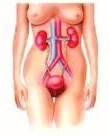 Kidney is the organ
that purifies the blood and is responsible for filtering blood, removing waste
and making urine to keep the body’s water and salt balance in check. When the
kidney stops functioning this process can not go on.
Kidney is the organ
that purifies the blood and is responsible for filtering blood, removing waste
and making urine to keep the body’s water and salt balance in check. When the
kidney stops functioning this process can not go on.
What is the role of
the dialysis machine?
When the patient’s kidney ceases to function,
the machine will play the role of kidneys. The machine will take the blood in
and send it through an artificial kidney which the blood, and send it to the
patient.
Tuesday, May 15, 2012
Natural Photos

Date :-2010-07-26
Photo :-Kandiyan dance flower
Camera :-Canon, Digital,IXUS 975IS
Photographer:-Shamitha Shane
Subscribe to:
Posts (Atom)